The shape, or form, of a tree is one of the most important things to consider when selecting the right tree for a project. A tree’s natural habit determines how it sits within a space, the structure it provides, and how it develops over time and because most trees broaden as they mature, it pays to plan for their ultimate size. Below is a guide to the tree shapes you’ll find throughout our range and in The Hillier Tree Guide, with examples from our range of tree and guidance on where each form works best.
Rounded Trees

A dense, broadly spherical crown carried on a clear stem gives the rounded form balance, symmetry and generous shade. It is a dependable specimen for parks, gardens and grounds, sitting comfortably in both formal and informal schemes. Acer platanoides ‘Globosum’ is a fine example, with a particularly tight, globe-shaped crown that stays dense and uniform without the need for pruning, alongside good tolerance of urban pollution and less fertile soils such as chalk and clay.
Pyramidal Trees

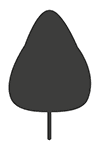
Broadest at the base and tapering to a defined point, the pyramidal form gives strong vertical structure and a clear, recognisable outline, particularly in its younger years. It makes an elegant specimen and suits avenues and larger landscape schemes. Cedrus deodara shows a classic pyramidal shape in youth, with a central leader that arches gracefully at its tip before broadening with age, while Betula pendula ‘Obelisk’ holds a neat, conical-pyramidal canopy into maturity.
Broad Trees

A wide, substantial crown that broadens further with age, the broad form is grown for presence and shade. It is best suited to open grounds, parks and larger gardens with the space to let the tree reach its full stature. Stately, long-lived options such as Quercus robur (English Oak), Fagus sylvatica (Common Beech) and Platanus x hispanica (London Plane) make impressive specimens and are well suited to significant landscape settings.
Upright Fastigiata Trees

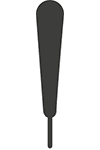
The narrowest of the upright forms, with branches held tightly to the stem, the fastigiate form is the most space-efficient choice for screening and structure. Its slim profile suits narrow plots, tight boundaries and urban streets. Carpinus betulus ‘Fastigiata’ begins with a neat, upright habit that broadens into a rounded crown with age, while Quercus robur ‘Fastigiata’ offers the character of the English Oak in a markedly more upright, space-saving form.
Broadly Columnare Trees

A fuller column that combines upright structure with a little more width, the broadly columnar form provides screening and presence without the strictness of a true fastigiate. It is a versatile choice for streets, boundaries and structured planting. Pyrus calleryana ‘Autumn Blaze’ is a good example, pyramidal when young and becoming broadly columnar with age, offering profuse spring flowering, excellent red-purple autumn colour and strong tolerance of air pollution.
Irregular Trees

A characterful form that doesn’t conform to a single outline, the irregular habit is valued for its individuality and is often chosen as a feature in its own right, with each tree developing its own distinct character. Pinus sylvestris (Scots Pine) is a fine example: pyramidal in youth, it opens out with age into a really attractive, irregular shape, its branches held high on bare, leggy trunks, especially striking when planted in groups.
Spreading Trees

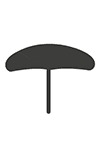
Often as wide as, or wider than, it is tall, the spreading form has an open crown that casts dappled shade and softens hard landscaping. It suits gardens, courtyards and seating areas where a relaxed, sheltering canopy is wanted at a manageable height. Many ornamental crab apples (Malus) and cherries (Prunus) display this habit, as does Acer ‘George Forrest’, which forms a slightly spreading tree with arching branches and a loose, attractive canopy.
Vase Trees

Branches rise and open outward from the base into a broad crown, giving the vase form useful height and canopy while keeping the lower stem clear — making it particularly valuable for streets and avenues where headroom and sight lines matter. Zelkova serrata ‘Green Vase’ is prized for its graceful, vase-shaped form, vibrant autumn colour and resilience in urban environments, keeping its elegant shape as it matures.
Tear Drop Trees

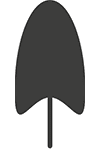
A rounded crown that narrows towards the base gives the tear drop form a neat, contained and well-defined outline, ideal for ordered, structured planting and locations where a tidy shape is required. Pyrus calleryana ‘Chanticleer’ is a classic example, a reliable, uniform street tree with a distinctive teardrop silhouette, glossy foliage, spring blossom and excellent tolerance of urban conditions.
Wide Oval Trees

Taller than it is wide, with a generous, rounded crown, the wide oval form balances vertical structure with good shade, making a dependable specimen for parks, avenues and larger gardens. Quercus frainetto ‘Hungarian Crown’ is a fine, fast-growing example, with upright branches forming a broadly oval head and large, deeply lobed leaves that turn yellow-orange in autumn, a grand tree that deserves to be more widely planted.
Large Pendula (Weeping) Trees

Long, arching branches that cascade towards the ground give the weeping form an elegant, instantly recognisable outline. It is best given space to display its shape, beside water, over a lawn, or as a stand-alone focal point. Fagus sylvatica ‘Pendula’ (Weeping Beech) is renowned for its sweeping, pendulous habit, maturing into a majestic presence, while Betula pendula and Salix babylonica ‘Pendula’ offer lighter, more delicate weeping canopies.
Upright Columnare Trees

Broadest at the base and tapering to a defined point, the pyramidal form gives strong vertical structure and a clear, recognisable outline, particularly in its younger years. It makes an elegant specimen and suits avenues and larger landscape schemes. Cedrus deodara shows a classic pyramidal shape in youth, with a central leader that arches gracefully at its tip before broadening with age, while Betula pendula ‘Obelisk’ holds a neat, conical-pyramidal canopy into maturity.
Choosing the Right Tree Shape
The best shape depends on what you need the tree to do. As a quick guide:
- Small or narrow spaces: columnar and fastigiate forms give height and screening with a minimal footprint.
- Screening and privacy: fastigiate, columnar and pyramidal forms; pleached and standard forms for instant, formal screens
- Shade: broad, spreading, vase and wide oval forms cover the largest area.
- Streets and avenues: vase forms keep headroom and sight lines clear; pyramidal forms give a uniform, formal line.
- Specimen or focal point: weeping, rounded and irregular forms make distinctive stand-alone features.
Remember that trees broaden as they age, so always plan for a tree’s mature and ultimate size. The Hillier Tree Guide shows illustrative silhouettes for each tree at 15, 25 and 50 years to help you choose with confidence.
Tree shapes – your frequently asked questions
What is the best tree shape for a small garden?
For restricted spaces, columnar and fastigiate trees are usually the best choice. Their narrow, upright habit delivers height, structure and screening while taking up very little ground room, making them well suited to small or urban gardens. For more on planting in tighter, built-up spaces, see our guide to the best trees for urban areas.
What is the difference between a columnar and a fastigiate tree?
Both are tall and upright, but a fastigiate tree is narrower, with branches held tightly to the stem. A columnar tree is slightly broader and fuller. Fastigiate forms are the more space-efficient of the two for tight boundaries.
Which tree shape is best for screening or privacy?
Fastigiate, columnar and pyramidal shapes are the most effective, as they provide height and density without spreading widely. For instant, formal screening, pleached and standard forms are also worth considering. These narrow, space-efficient forms are also ideal for planting in urban environments.
Which tree shapes give the most shade?
Broad, spreading, vase and wide oval shapes provide the most shade, as their wide crowns cover a larger area. Vase-shaped trees are particularly useful where shade is wanted overhead but a clear stem is needed beneath – which is why these forms feature heavily in our guides to the best trees for car parks and trees for schools and playgrounds.
How does a tree’s shape change as it matures?
Most trees broaden as they age, so a young, narrow specimen may develop a noticeably wider crown over time. It’s important to plan for the tree’s mature and ultimate size, The Hillier Tree Guide shows silhouettes at 15, 25 and 50 years to help.
Find the right tree for your project
Browse our trees by shape to find the form that suits your space, or download The Hillier Tree Guide for detailed silhouettes, sizes and soil tolerances across our full range. For tailored specification advice, our team is always happy to help.